
The ABBA Superfan Who Got the Girl—and Wouldn’t Let Her Go
Agnetha Fältskog is best known as one of the voices of ABBA, the Swedish group that became a worldwide sensation after winning Eurovision in 1974.
That performance also introduced her to Gert van der Graaf, an eight-year-old boy watching from the Netherlands. His fascination with the singer would eventually lead him to learn Swedish, move to Sweden and become her boyfriend.
But when Fältskog ended their relationship, van der Graaf refused to accept it. What followed was years of unwanted contact, court appearances and repeated attempts to keep him away from her.
The Agnetha Fältskog Stalking Case at a Glance
- Gert van der Graaf became a fan of Agnetha Fältskog after watching ABBA win Eurovision with “Waterloo” in 1974.
- As an adult, he moved to Sweden and acquired a cottage near her home on Ekerö, outside Stockholm.
- They began a relationship in 1997, but Fältskog ended it in 1999. He continued to write, call and follow her.
- In 2000, he was convicted of harassment and expelled from Sweden with a two-year ban on returning. Further incidents led to another expulsion and later convictions.
- The case became the subject of the 2023 documentary Take a Chance, which Fältskog’s representatives had asked the producers not to make.
How Gert van der Graaf Met Agnetha Fältskog
A Childhood Fascination
Born in the Netherlands, van der Graaf was eight when ABBA won the 1974 Eurovision Song Contest. He was especially drawn to Fältskog, whose blonde hair and silver platform boots made her an unmistakable part of the performance.
As he grew older, his interest became increasingly personal. By his own account, he once cycled about 35 miles to a Dutch television studio where she was appearing. When Fältskog told the audience she loved them, he believed she meant him.
He began learning Swedish from a phrasebook and writing letters to her. Some were addressed to little more than “Agnetha Fältskog, Sweden.”
Eventually, he started traveling to Sweden in the hope of meeting her.
“I went to Sweden 32 times,” he later told Solna District Court. “The 25th time I got in contact with her.”
Moving to Sweden
By the 1990s, Fältskog was spending much of her time away from the entertainment industry. ABBA had stopped working together in 1982, and after releasing several solo albums, she had stepped back from recording and publicity.
She lived on Ekerö, an island outside Stockholm. Van der Graaf acquired a cottage nearby and found work as a forklift driver.
The move put him close to the singer he had spent years trying to meet. In 1997, the two began a relationship. Fältskog was 47; van der Graaf was 16 years younger.
She later told the court that the relationship had followed a determined effort on his part.
“It was a very intense courtship from his side,” she said. “Finally I felt I couldn’t resist anymore.”

- Stieg Larsson's Millennium trilogy opener, set in Sweden
- The book that put Swedish crime fiction on the world map
- Vintage paperback edition
The Relationship Ends
The relationship lasted until 1999, although Fältskog said she had tried to break it off three times.
Van der Graaf continued trying to reach her after the final separation. He sent letters, called at all hours and waited near her house. He also followed her and searched through her mailbox.
Fältskog made it clear that she did not want to get back together. In a letter reported by the New York Post, she wrote: “Gert, I want to be left alone. There’s no hope for us together. I don’t want any more letters. Nothing else!”
But the contact continued, even after a restraining order.
On Christmas Eve 1999, she testified, van der Graaf suddenly appeared outside her window.
“He almost scared me to death,” she said.
Fältskog Takes the Case to Court
By 2000, Fältskog had told police that she feared for her own life and those of her children. That October, she appeared at Solna District Court to testify against van der Graaf.
At her request, he listened from an adjoining room.
“I have been deprived of my liberty for over a year,” she told the court. “He has watched me everywhere, sometimes he has scared the life out of me.”
Van der Graaf acknowledged the letters and telephone calls but denied committing a crime. He maintained that he was trying to restore their relationship and had no intention of hurting her.
“I’m not a violent person and I have never wanted to cause her any harm,” he said. “I just wanted to try to get her back.”
The court convicted him of harassment. He was expelled from Sweden and banned from returning for two years.
For Fältskog, the ruling meant that her former boyfriend would have to leave the country. It did not, however, bring a lasting end to the unwanted contact.

- Sweden-only coverage: Stockholm, Gothenburg, Lapland, and more
- Itineraries, maps, and local tips for every region
- Includes northern-lights planning and day trips
Repeated Returns to Sweden
After the ban expired, van der Graaf returned to Sweden.
In 2003, a prosecutor told the Swedish newspaper Aftonbladet that he had sent more letters and made a telephone call despite being prohibited from contacting Fältskog. He was expelled from the country again that year.
According to the Swedish broadcaster SVT, he was arrested outside her home in 2006.
In 2011, he was convicted of violating the restraining order through further letters and telephone calls. More than a decade after their breakup, Fältskog was still dealing with his attempts to contact her.
“I shall never again try to contact her,” he told the court that year.
The Take a Chance Documentary
The case returned to public attention in May 2023 with the release of Take a Chance on Prime Video.
Directed by Maria Thulin, the documentary explored van der Graaf’s fixation on Fältskog through interviews with him and people familiar with his story. It also featured stalking specialists, including Rhonda Saunders, the prosecutor in Madonna’s stalking case.
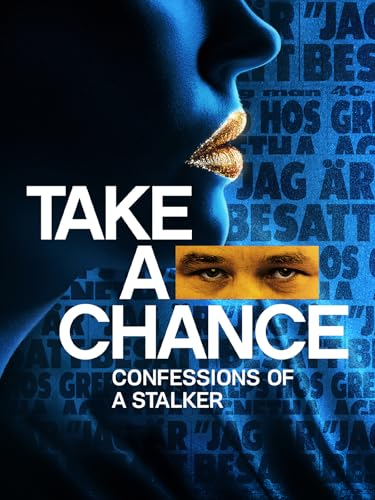
- Gert van der Graaf tells the story himself, from the Waterloo crush at age eight to the restraining order
- Psychologists, stalking experts and his own friends trace how fandom tipped into obsession
- The Swedish documentary Agnetha asked the producers not to make, now streaming on Prime Video
Thulin said she wanted to better understand stalking and had brought in experts to explain its effects on victims.
Fältskog declined to participate. Her representatives also contacted the producers to say that she did not want the film made.
Reporting on the documentary described van der Graaf keeping books, records and clothing associated with Fältskog, ABBA and Sweden in his Volvo. He was still writing letters to her, although he said he no longer sent them.
Fältskog’s Return to Music
While the legal cases continued, Fältskog gradually returned to recording.
In 2004, she released My Colouring Book, an album of cover songs. In 2013, she followed it with A, her first album of new material since 1987.
A decade later, she announced A+, a reworked version of that record, along with a new song, “Where Do We Go From Here?”
In a letter to fans, she explained that hearing a song from A on the radio had brought back happy memories of making it. She began wondering how the album would sound if it were produced again, and contacted the original producers to find out.
Her return to music gave listeners something she had chosen to share. Her account of the stalking case remained far more limited, but her testimony had made her wishes clear years earlier.
“I want my freedom back,” she told the court, “and live a normal life again.”