
Döstädning: The Swedish Art of Death Cleaning
My friend's mother pressed a box of her good china into my hands and announced, cheerfully, that she was death cleaning. I nearly dropped it on the kitchen floor.
She wasn't ill, and she wasn't being morbid. She was doing döstädning, and by Swedish standards it was one of the kindest ways she could spend her autumn.
What Döstädning Means
Döstädning is a compound of two ordinary Swedish words: "dö," to die, and "städning," cleaning. Together they name the practice of decluttering your own home so the people you leave behind won't have to do it for you.
The logic is simple and a little piercing. Someday, someone who loves you — probably while grieving — will have to open every drawer and closet you own and decide what to do with all of it.
Death cleaning does that sorting now, while you're here to tell the stories and hand things to the right people. That's the whole idea.
The Book That Took It Global
The word left Sweden in 2017, when the artist Margareta Magnusson published "The Gentle Art of Swedish Death Cleaning." She described her age as somewhere "between eighty and one hundred," which tells you the tone of the whole book.
It became an international bestseller and turned döstädning into a word English speakers suddenly needed. There's even an American TV adaptation, with Amy Poehler involved as narrator.
Magnusson's version is funny and brisk, not gloomy. Her test for any object is whether it will make someone happy — and whose problem it becomes later if the answer is no.
Considerate, Not Morbid
Americans tend to flinch at the name, and I did too. Swedes mostly don't, because the culture treats practical matters — death included — with a certain calm plainness.
Framed the Swedish way, döstädning is a courtesy, like cleaning a rental before you hand back the keys. Nobody calls it giving up; it's closer to good manners on a long timeline.

- Each cloth replaces 15+ rolls of paper towels
- Odor-resistant cellulose — wring dry, machine wash
- 10-pack of the kitchen staple Sweden invented
That mindset fits a country that already prefers owning exactly enough. It's the same instinct I wrote about in my piece on lagom, applied to the full arc of a life.
How It Differs From Decluttering Trends
Most decluttering methods ask what an object does for you — whether it's useful, whether it sparks joy. Death cleaning flips the audience: the question is what the object will do to the people who inherit it.
That flip changes the outcome. A box of letters might bring you joy and still deserve sorting, labeling, or a conversation, because a mystery box is a burden even when it's precious.
It's also not a weekend purge. Döstädning is meant to be an ongoing habit, typically started somewhere in middle age and revisited for the rest of your life, at whatever pace suits you.
Magnusson even allows a cheat: a small box of purely private things, labeled so it can be thrown away unopened. Everything else should make sense to someone standing in your home without you.
How to Actually Start
Start big and boring, not small and sentimental. Closets, storage units, and the garage go first, because duplicates and never-used things need no soul-searching.
Photos and letters come last, once you've built momentum. And give things away while you're alive whenever you can — a lamp handed over with its story beats the same lamp in an estate pile.
Don't forget the digital pile either. Passwords, photo libraries, and accounts are drawers too, and leaving a way in for someone you trust is part of the same courtesy.
Then tell someone what you're doing. Half the value of döstädning is the conversation it forces about what actually matters in the house.
Why It Stuck With Me
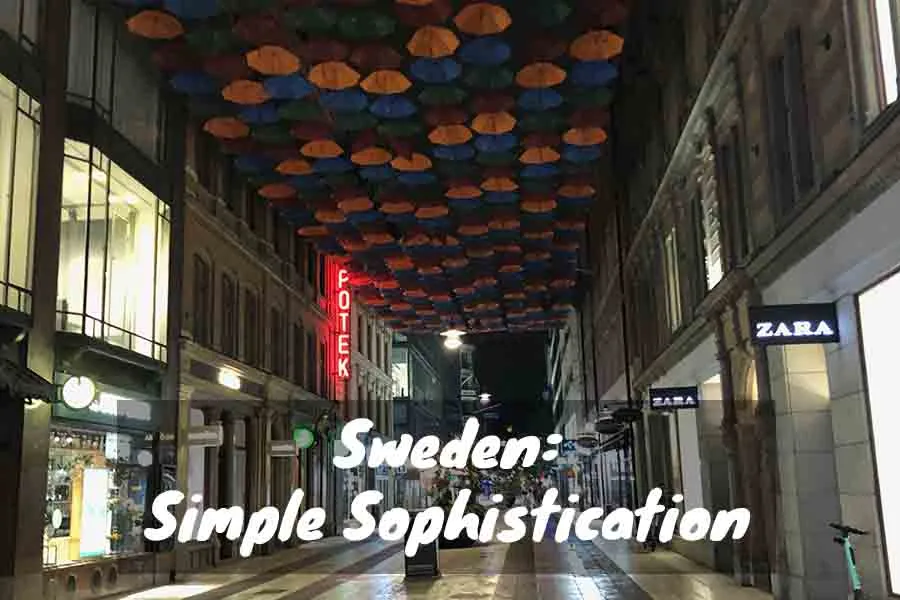
Sweden keeps producing these small, sturdy ideas about living with less — I've written about how the whole aesthetic runs on simple sophistication. Döstädning might be the most generous one of them.

- Explains lagom — "not too little, not too much, just right"
- Practical Swedish habits for work, home, and downtime
- A quick, giftable read on how Sweden lives
It's also one more Swedish word English can't quite translate, and it's in good company — I collected the rest in my list of untranslatable Swedish words.
Open one drawer this weekend — then imagine someone else opening it instead, and decide what stays.