
Swedish Meatballs: The Real Story Behind IKEA's Icon
Halfway through a plate of köttbullar at a Stockholm lunch counter, I learned that Sweden's official Twitter account had once handed the national dish to Turkey. Nobody around me had stopped chewing over it, which told me most of what I needed to know.
The Tweet That Broke the Food Internet
In 2018, Sweden's official account posted that Swedish meatballs were actually based on a recipe King Charles XII brought home from Turkey in the early 1700s. Within hours, world media were declaring the national dish a fraud.
The claim wasn't pulled from thin air. Charles XII really did spend years in the Ottoman Empire after a disastrous war, and he really did bring habits home — coffee drinking among them.
But food historians pushed back fast, because no evidence ties the king to any meatball recipe. The dish those Ottoman years more plausibly influenced is kåldolmar, Sweden's beloved stuffed cabbage rolls.
So Where Do Köttbullar Come From?
Ground-meat dishes existed all over Europe long before anyone branded them. Meatballs show up in Swedish cookbooks by the mid-1700s, and the version the world knows — small, butter-fried, cream-sauced — evolved at home in Swedish kitchens.
However the idea first crossed a border, köttbullar as they exist today are Swedish through and through. The Turkey tweet made great headlines and mediocre history.
They're also the flagship of husmanskost, the plain, hearty home cooking Swedes get quietly emotional about. I put that food culture in context in my rundown of what Swedes actually eat.
The Real Plate, Piece by Piece
A proper serving is a small architecture with fixed parts: meatballs, pale cream sauce, boiled or mashed potatoes, raw-stirred lingonberries, and pressgurka — quick-pickled cucumber slices. Every element earns its spot.
The sauce is rich, so the tart lingonberries cut straight through it. The vinegary cucumber resets your palate between bites, and the potatoes hold the whole operation together.

- The classic Swedish accompaniment to meatballs and pancakes
- Also great with turkey, ham, chicken, and breakfast dishes
- From Felix, one of Sweden's best-known food brands
Skip the lingonberries and a Swede will materialize to ask if something's wrong. It's the same logic as cranberry sauce with turkey, and it makes sense by the third bite.
How They're Made (In Spirit, Not in Steps)
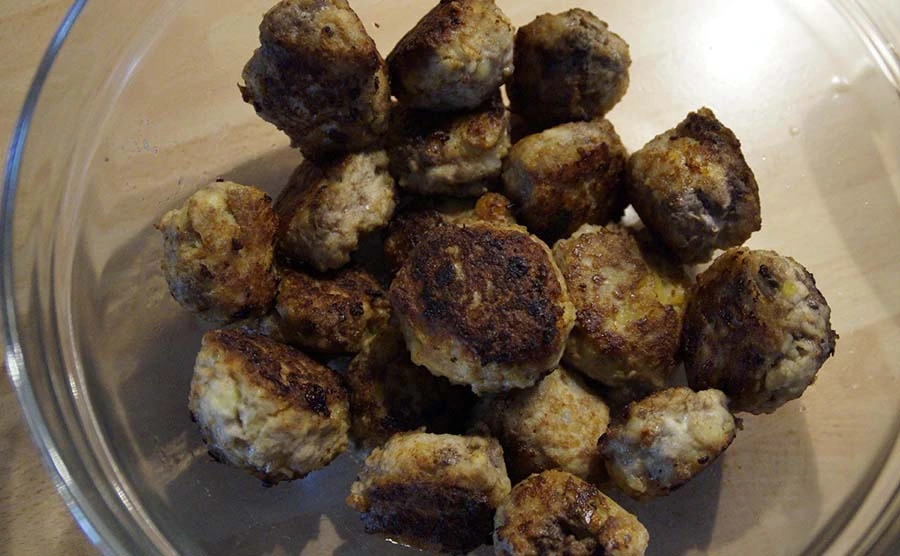
Home cooks mix ground beef and pork with finely chopped onion and breadcrumbs softened in milk or cream. Seasoning stays simple — salt, white pepper, maybe a whisper of allspice — and the balls roll out small, about walnut-sized.
They're fried in butter until browned all over, and the pan drippings become the base of the cream sauce. That's the entire magic: modest ingredients, careful handling, zero showboating.

- Over 80 approachable recipes from Scandinavia
- By the owners of London's ScandiKitchen café
- Everyday dishes, open sandwiches, and baking
Every family swears by its own ratios, and grandmothers don't publish numbers. I respect that far too much to pretend there's one true recipe.
The IKEA Factor
Then there's the blue-and-yellow elephant in the room. IKEA serves meatballs by the hundreds of millions every year, which quietly makes a furniture chain one of the planet's biggest meatball restaurants.
Founder Ingvar Kamprad's logic was reportedly that hungry customers don't buy bookshelves. The cheap plate by the checkout became Swedish food's global ambassador, with vegetarian versions now riding along.
Are they the authentic experience? They're the gateway version — genuinely decent, but a home-cooked plate or a proper husmanskost lunch in Stockholm plays in a different league.
The cafeteria did teach millions of people to attempt the word köttbullar, or at least to point at it confidently. If the store's naming system has ever puzzled you, I decoded it in my piece on IKEA product names.
Swedish vs. "Swedish"
Abroad, the dish drifts: sauce thickened into gravy, grape jelly standing in for lingonberries, spaghetti lurking nearby. Sweden watches these interpretations with polite horror.
The home version is quieter and better balanced. Once you've tasted the real pairing of butter, cream, and tart berries, the imitations sound like a cover band.
Beyond the Cafeteria Tray
In Sweden, köttbullar are everyday food, not a showpiece. They turn up in lunchboxes, in school cafeterias, and in miniature on the Christmas julbord.
For travelers, they're the safest great order on almost any menu. I ranked them high in my list of delicious foods from Sweden, and I stand by every word.
Order the full plate — sauce, potatoes, pickled cucumber — and don't negotiate away the lingonberries.