
Swedish Prison Food: Less Luxury, More Lunch Canteen
Do Swedish prisoners really eat restaurant-quality meals in hotel-like cells? The internet loves that story. The food itself is much less cinematic: a tight institutional budget, large kitchens, ordinary cooked dishes, and rules designed to keep people fed.
There is no single Swedish prison menu. Food changes by institution, security level, kitchen, dietary need, and day. The most accurate picture looks closer to a school or workplace canteen than either a punishment loaf or a Nordic tasting menu.
What the Rules Actually Guarantee
Swedish correctional rules focus on adequacy and access rather than a named menu. A person in prison has the right to food at customary meal times and to meals adapted for medical needs.
Religious requirements should be considered as far as possible, and a vegetarian option must always be available. Meal times can also be adjusted for medical or religious reasons. During free time, inmates may prepare or receive a hot drink unless safety or order prevents it.
Those rights are summarized in a Swedish Parliament justice committee report. They do not promise steak, endless choice, or a private kitchen. They establish a basic floor.
What Does a Day of Prison Food Look Like?
Public reporting describes breakfast, lunch, dinner, and a snack or evening meal. The exact service model varies. Some food comes from institution kitchens; different units may eat in a dining space, collect trays, or receive meals where they are housed.
A plausible menu uses the same broad food language as other Swedish public kitchens:
- Porridge, bread, cheese, and milk or coffee at breakfast
- Soup, stew, pasta, fish, sausage, or a vegetarian main at lunch
- Potatoes, rice, or pasta with cooked vegetables and sauce
- Crispbread, fruit, or another simple snack
That is an illustration, not a nationwide menu. A remand center and a lower-security prison do not necessarily buy, cook, or serve food the same way.

- Eight boxes: multi grain, whole grain, hearty rye, and sourdough
- The crispbread on practically every Swedish table
- Fat-free and non-GMO — built for butter, cheese, and kaviar
The Food Is Recognizably Swedish—Sometimes
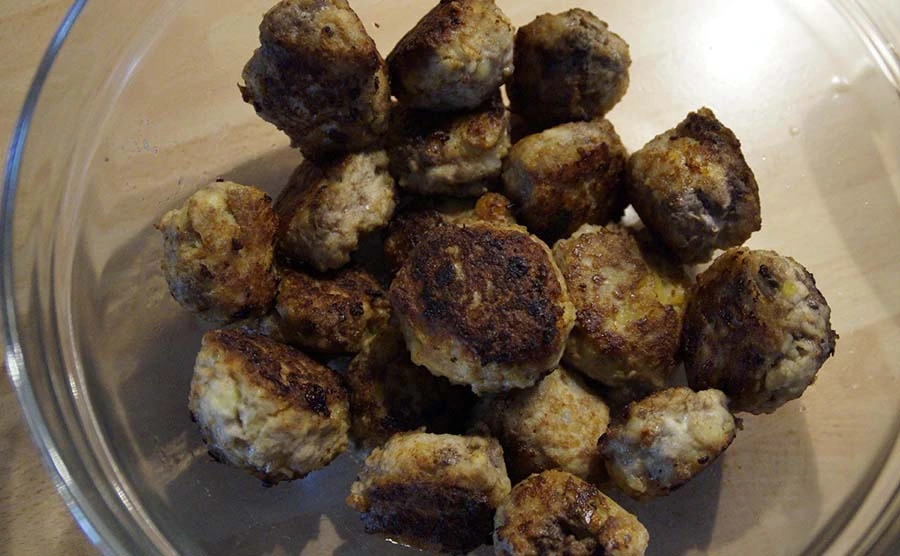
Traditional dishes fit institutional cooking because they scale. Pea soup, meatballs, fish with potatoes, sausage stroganoff, pancakes, cabbage, and casseroles can feed many people without restaurant plating.
Thursday pea soup and pancakes did not originate in prison. It is a wider Swedish lunch tradition that also appears in schools, military settings, workplace canteens, and restaurants.
Modern menus also reflect the people eating them. Pasta, rice dishes, curries, chicken, vegetarian stews, and food adapted for religious needs belong in the picture. “Swedish prison food” does not mean every tray carries meatballs and a tiny flag.

- Over 80 approachable recipes from Scandinavia
- By the owners of London's ScandiKitchen café
- Everyday dishes, open sandwiches, and baking
How Much Does It Cost?
An SVT report published in January 2025 put the average food cost at 52 Swedish kronor per inmate per day, covering breakfast, lunch, dinner, and snacks. It also stressed that costs and arrangements varied between institutions.
That figure is a dated snapshot, not a permanent national price tag. Food prices move, contracts change, and a small kitchen does not have the same economics as a large one. What it does show is the scale of the constraint: the budget covered a full day, not one photogenic plate.
Pytt i panna—the hash made from diced potatoes and meat—is not evidence of a prison menu, but it demonstrates the logic of Swedish budget cooking: use familiar ingredients, waste little, and make one pan feed a room.
Is It Nutritious?
The rules and the plate are not always the same thing. A small 2025 study examined four days of reported menus from three Swedish prisons. Across the combined meals, researchers found more energy, saturated fat, and sodium than recommendations, with too little fiber and polyunsaturated fat.
That sample is far too small to describe every prison. It does puncture both easy myths: the system is neither automatically ideal because it is Swedish nor automatically inedible because it is prison. Kitchen staff in the study described real challenges and a desire to serve better, nutritious meals within the system they had.
Who Cooks the Food?
Swedish prisons and remand centers have access to institutional kitchen operations, but production differs. Trained kitchen staff may plan, buy, and cook at scale. In some prison settings, supervised food preparation or self-catering can form part of daily responsibility; tighter-security environments leave less room for that.
That distinction matters. Cooking can teach budgeting, hygiene, planning, and a routine useful after release. It is also subject to the same safety limits as every other prison activity.
Why the “Luxury Prison” Story Misses the Plate
Sweden's correctional system is often discussed through its emphasis on rehabilitation. That does not transform a canteen meal into a reward. Feeding people regularly, respecting medical needs, and offering a vegetarian option are administrative and human-rights basics.
The honest answer to “What do Swedish prisoners eat?” is ordinary food under unusual restrictions. Some meals will be popular, others will fail, and quality will vary with the kitchen. The tray tells a less dramatic story than the headline—and a more useful one.