
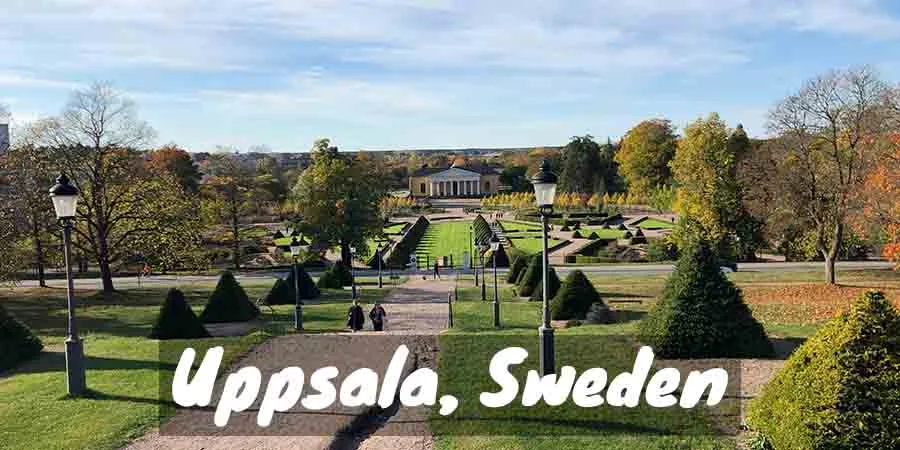
Uppsala: Sweden's 4th Largest City in an Afternoon
Mid-October, a Saturday, an hour north of Stockholm by train. I stepped off at Uppsala with no tour booked, no plan, and about four hours to spend in Sweden's fourth-largest city.
Fourth-largest sounds big, and Uppsala does hold more than 172,000 people. On foot, it never feels that way.

- Covers Sweden alongside Denmark, Norway, Finland, and Estonia
- Self-guided walks, itineraries, and honest sightseeing advice
- Updated regularly by Rick Steves' research team
I walked every major sight, ate a proper lunch, and still fit in the bus trip out to Gamla Uppsala — all in those four hours. If you're basing yourself in the capital, like I did on my first day in Stockholm, it's one of the easiest day trips from Stockholm you can make.
A Short History of Uppsala
Uppsala is old even by European standards. Before Sweden was Christian, Gamla Uppsala just north of town was the religious and royal center of the Svea kings — medieval writers described a great pagan temple here, and the kings themselves went into the burial mounds you can still climb.
When Christianity won, the church planted its flag on the same ground. Sweden's archbishop has been seated in Uppsala since 1164, which makes this small city the country's religious capital to this day.
The Middle Ages gave Uppsala its two giants: the cathedral, consecrated in 1435 after more than a century of construction, and Scandinavia's first university in 1477. Gustav Vasa added the castle in the 1540s, and a catastrophic fire in 1702 burned much of the old town — what you see today grew back around the monuments that survived.
Sweden's Oldest University Town
The city's anchor is Uppsala University, the oldest university in Scandinavia — it's been teaching since 1477. Anders Celsius worked here, and yes, that's where the Celsius scale comes from.
I wandered the campus and ducked into the university library's reading room, the quietest room I've ever stood in. If reading is your idea of a good time, it's heaven — the library, Carolina Rediviva, also guards the Silver Bible, a 1,500-year-old manuscript written in silver ink on purple parchment.

- Sweden's iconic school pack, essentially unchanged since 1978
- Hardwearing, water-resistant Vinylon F fabric
- Converts between backpack and shoulder bag; includes seat pad
Geography check: Scandinavia is Sweden, Norway, and Denmark — Finland and Iceland are Nordic, not Scandinavian. More of those live in my quick facts about Sweden.
Pictures of Uppsala's City Center
I skipped the guided tours and let the streets decide. The Fyris river cuts straight through the middle of town, and most of what's worth seeing sits within a few blocks of it.
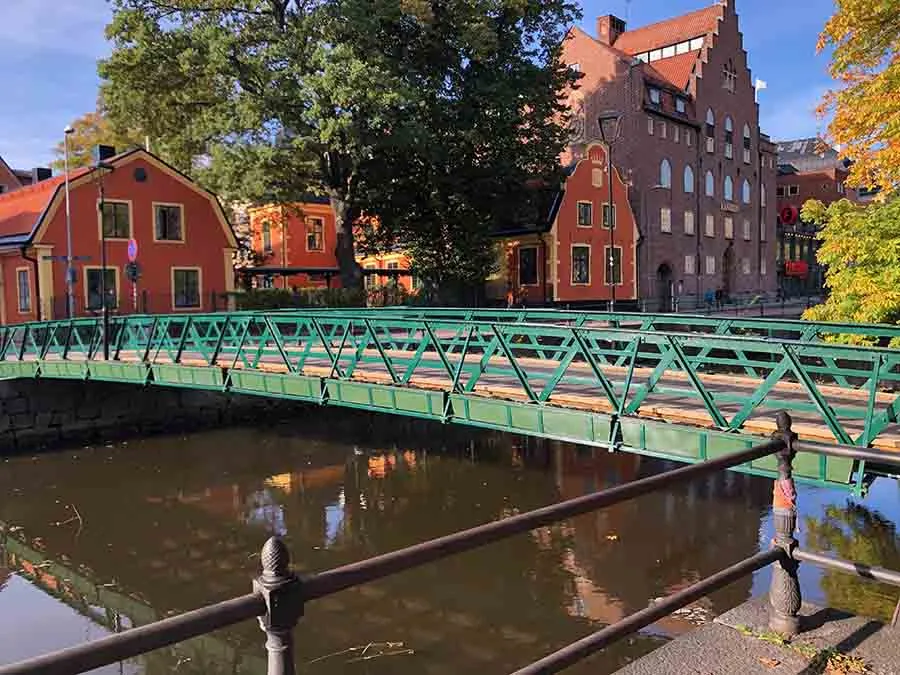
That little bridge is your welcome mat — the Fyris is stitched with footbridges like this one, and following them upstream is the best free tour in town. Every April 30th, on Valborg, students race homemade rafts down this river while tens of thousands cheer from the banks, the one day a year the quiet city gets genuinely loud.
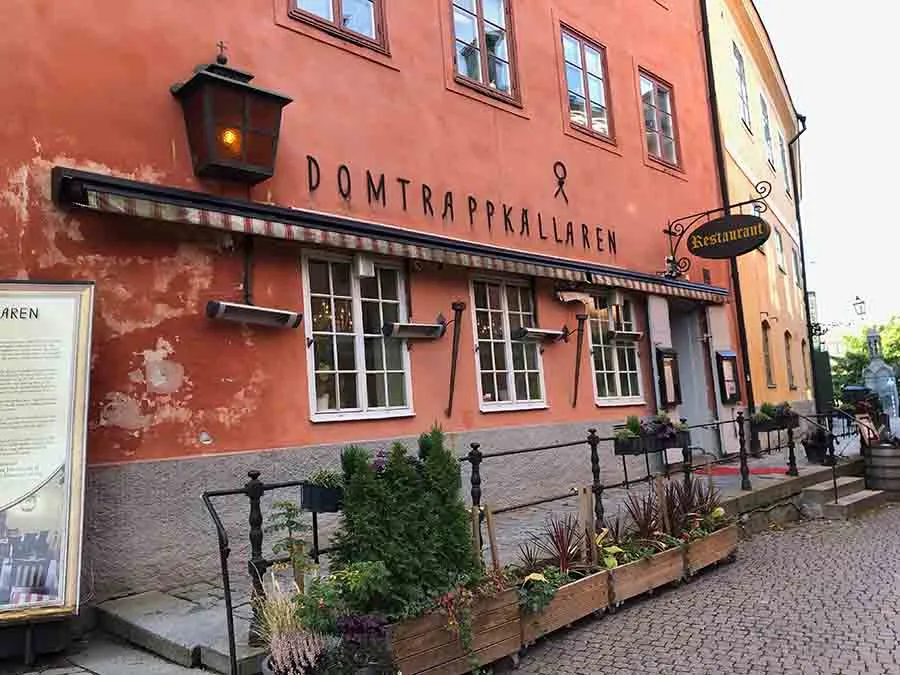
Domtrappkällaren, above, is a restaurant set in a medieval cellar beside the cathedral steps — the vaults it occupies have stood since the 1300s. Students who failed their exams were once said to drown their sorrows down here; it's the kind of place you book before you board the train.
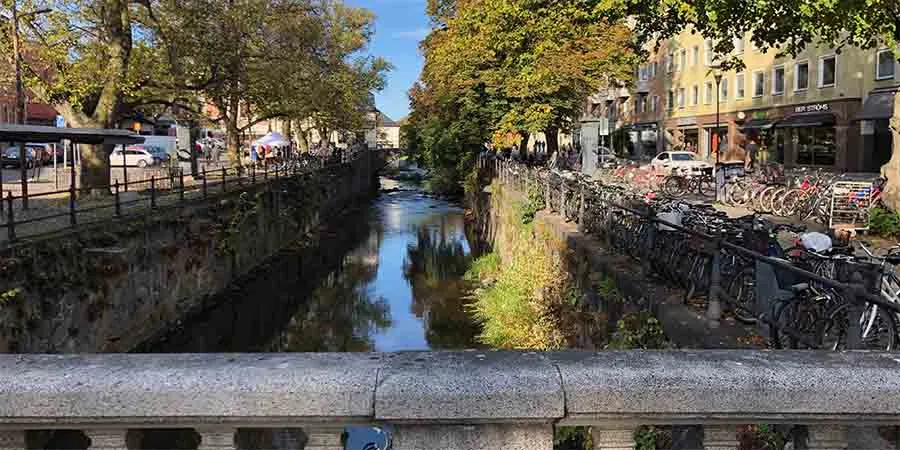
Channels like this once powered the town's mills, and the river still sets Uppsala's walking pace. Locals fika on the terraces beside the water even in October, blankets provided.
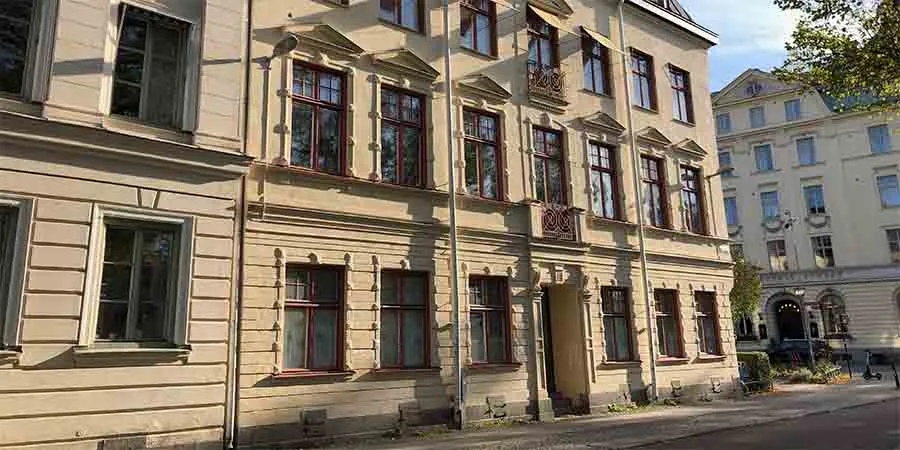
I still don't know what that building is, and I've made peace with it. Uppsala's center is full of these low, painted houses from the rebuild after the great fire of 1702 — the city that burned was medieval, and the one that grew back kept its footprint.
Uppsala Castle
Gustav Vasa began the castle in the 1540s, planted on the hill with the best view in town. The story goes he aimed its cannons straight at the cathedral — a blunt reminder to the archbishop of who ran Sweden.
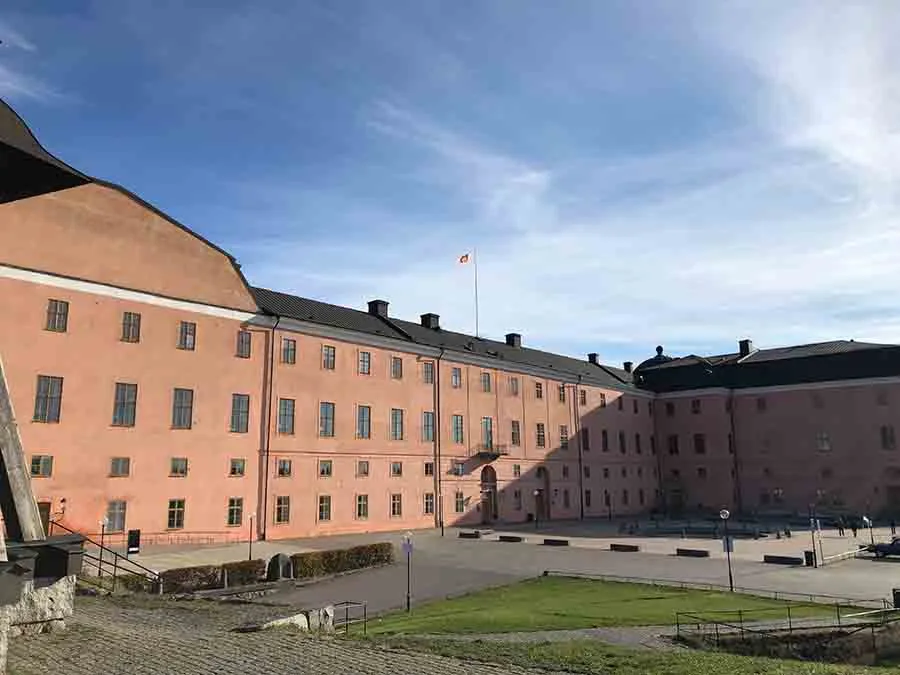
The pink walls have seen more Swedish history than almost any building in the country. Queen Christina shocked Europe by abdicating her crown in its hall in 1654, and a century earlier the castle hosted the darkest chapter of the Vasa era, when King Erik XIV had the rival Sture noblemen murdered inside its walls.
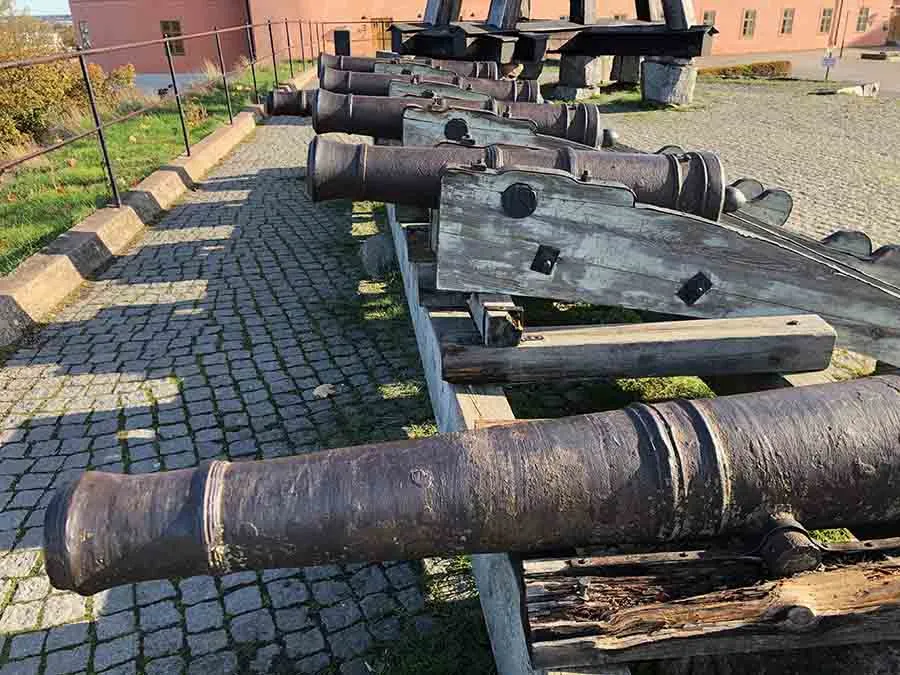
The cannons still point downhill at the cathedral, exactly as Vasa intended. It's the longest-running architectural power play in Sweden.
Uppsala Cathedral
The cathedral is the largest church in the Nordic countries, and Swedish kings were crowned under its towers for centuries. Gustav Vasa is entombed inside, and so is Carl Linnaeus, the Uppsala botanist who named half the living world.
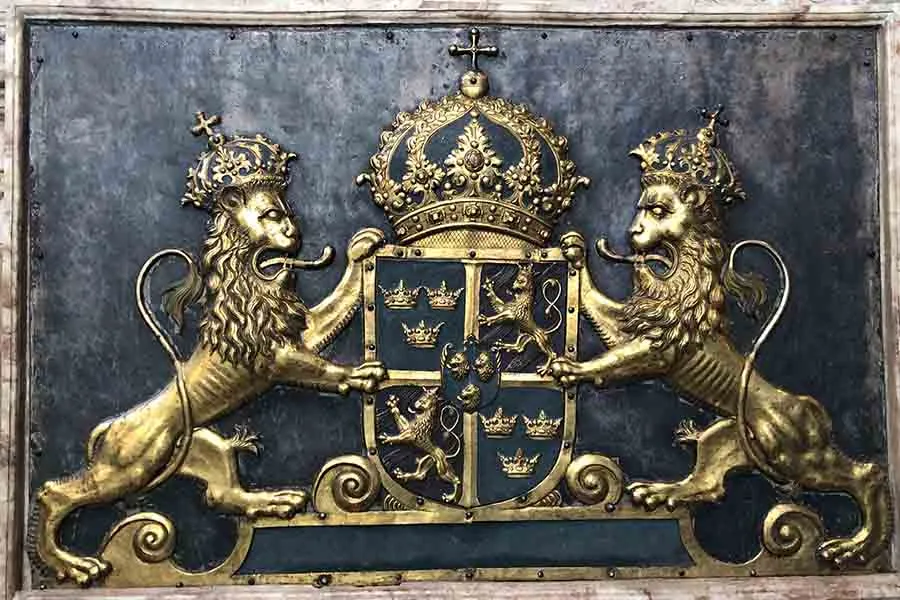
Heraldry like this marks the resting places of the people who built the country — besides Vasa and Linnaeus, the golden shrine of Saint Erik, Sweden's patron saint, has drawn pilgrims here since the Middle Ages. One more number for the road: the twin towers rise 118.7 meters, which makes the building exactly as tall as it is long.
Uppsala Botanical Gardens
Below the castle hill sit the university's botanical gardens, quiet even on a Saturday afternoon. They make an easy breather between the big sights.
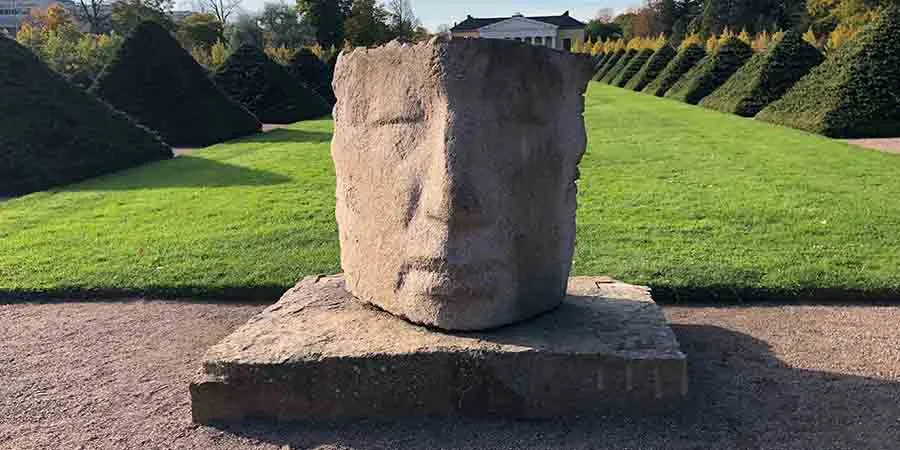
The land itself was a royal gift — King Gustav III handed the castle's own gardens to the university in 1787, in honor of Linnaeus's work. The great botanist's original teaching garden, the Linnaeus Garden, still grows a few blocks away, planted to his own 18th-century scheme.
Gamla Uppsala – the Mounds
A city bus took me the short hop north to Gamla Uppsala — gamla is Swedish for "old." This is where the city began, and where three great burial mounds rise out of an open field.
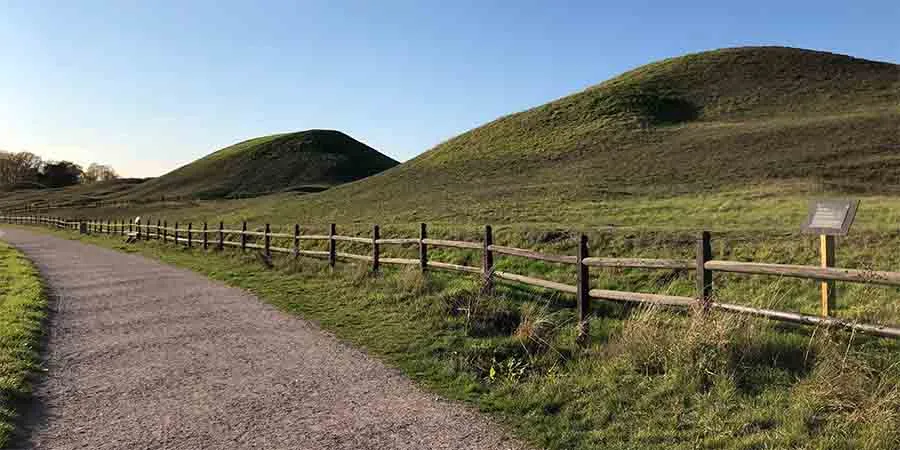
Archaeologists credit Iron Age kings rather than gods — the mounds went up in the 5th and 6th centuries, and excavations that began in 1846 found cremated remains and treasures inside. But in the October wind, the old story feels easier to believe.
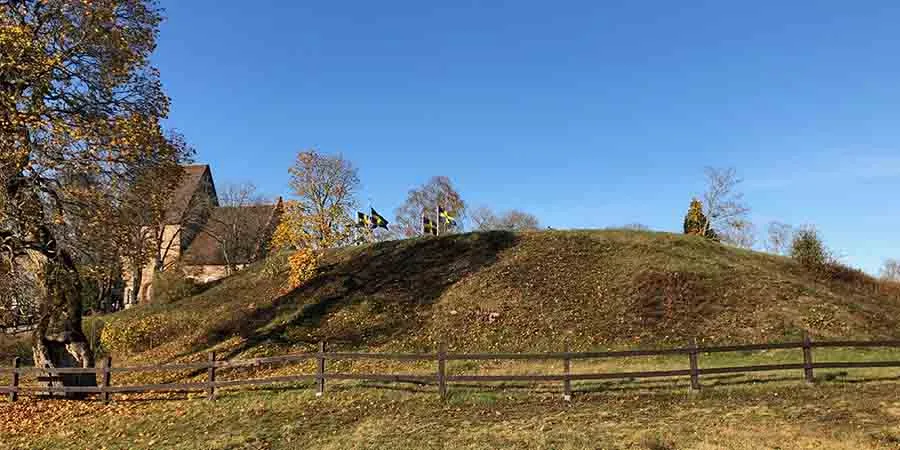
The flat-topped Thing Mound was the podium of early Swedish democracy: freemen gathered here at the ting to argue law, settle disputes, and talk back to their kings. If you like walking where the Viking Age actually happened, I've mapped more spots like this in Vikings in Sweden.
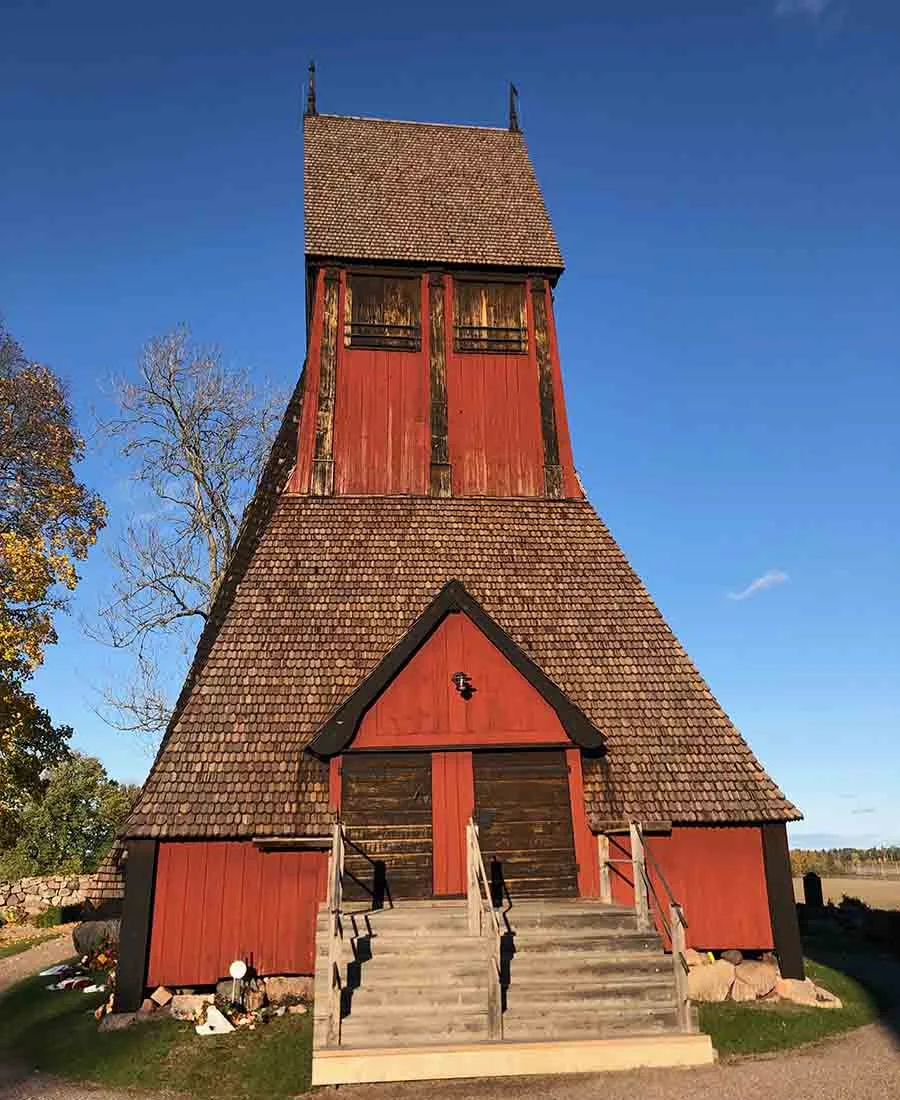
The rest of the site is open field and red-painted farm buildings, the Sweden you see on postcards. That deep falu red comes from the copper mine at Falun, and Swedes have been protecting their wooden houses with it for centuries.

- 30W fast charging — roughly two full phone charges
- Built-in USB-C cable tested to over 10,000 bends
- Pocket-size insurance for long sightseeing days
When the wind won, I ducked into the restaurant by the entrance to warm up before the bus back.
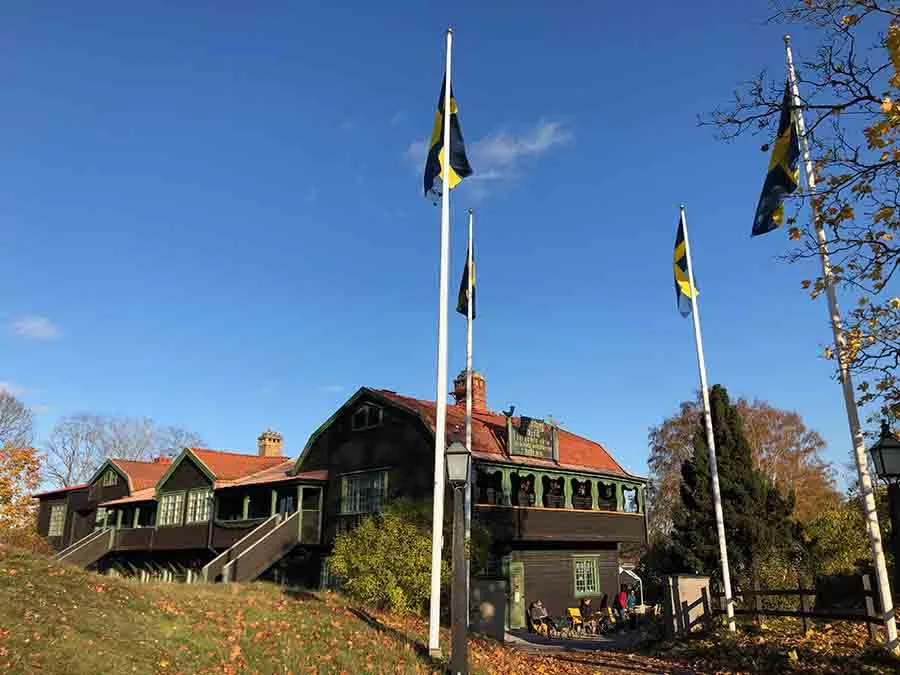
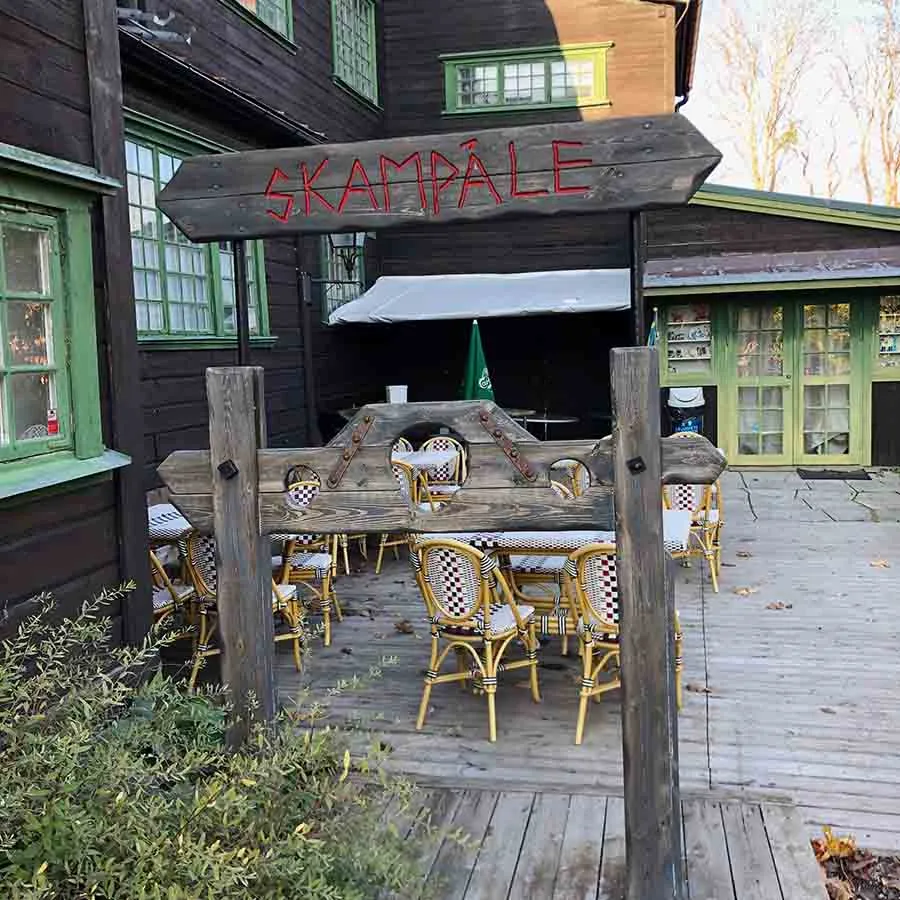
The inn by the mounds leans happily into its Viking-age address — that wooden post is a skampåle, a shame pole of the kind once used for public punishment, and the menu will sell you a horn of mead with a straight face. After an hour among thousand-year-old graves, it works.
Famous Names From Uppsala
For a city this size, Uppsala's guest book is absurd. Anders Celsius was born here in 1701 and built Sweden's first observatory on the main street; Carl Linnaeus taught generations of botanists in the gardens you just saw.
Film director Ingmar Bergman was born in Uppsala in 1918, and UN Secretary-General Dag Hammarskjöld grew up inside the castle itself, where his father served as county governor. Add the physicist Anders Ångström — the man the unit of light is named after — and eight centuries of crowned kings, and the town punches far above its weight.
Video of Uppsala, Sweden
Prefer to see it move? This short tour covers the same ground.
Catch a morning train from Stockholm Central and you'll be back in the capital by dinner.
7 Easy Day Trips From Stockholm Worth the Train Ride
Vikings in Sweden: Where to Walk in Their Footsteps