Vikings in Sweden: Where to Walk in Their Footsteps
I walked right past my first runestone because it looked like any other gray slab leaning in a churchyard, half swallowed by grass. Then the light shifted, a carved serpent surfaced from the moss, and a sentence written a thousand years ago was suddenly at my feet.
That's the thing about Viking history in Sweden — it isn't fenced off in theme parks. It stands around in fields and churchyards like it never left.
Here's where I'd send you to walk through it for real.
Birka: Sweden's Viking Boomtown
Birka sits on the island of Björkö in Lake Mälaren, an easy summer boat trip from central Stockholm. Around the 750s it grew into one of Sweden's first real towns, a trading hub where furs and iron met silver and silk.
UNESCO lists it as a World Heritage Site, and archaeologists have been digging there for over a century. Thousands of grave mounds still ring the old town site.
The boat takes a couple of hours each way, and the island has a museum plus a reconstructed Viking village. Guides in period dress walk you through daily life without the cosplay getting silly.

- The classic Swedish "Viking chess" backyard game
- Hand-sanded hardwood set with engraved team graphics
- Plays on grass, sand, or snow — just like in Sweden
Boats only run in the warm months. Check the schedule before you build a day around it.
Gamla Uppsala's Royal Mounds
Just north of Uppsala's center, three huge burial mounds swell out of the plain — the resting places, tradition says, of ancient kings. They're usually dated to around the 6th century, a bit before the Viking Age proper, but the ground stayed sacred straight through it.
Medieval writers described a great pagan temple here, though archaeologists still argue about what exactly stood where. Standing on the mounds at dusk, the argument feels very academic.
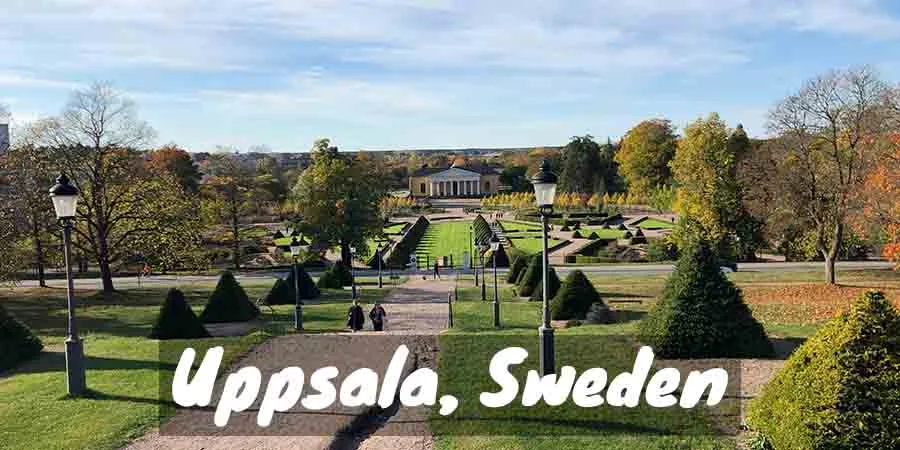
The site is free, open year-round, and minutes from town. I folded it into my Uppsala day trip, which is the easiest way to see it from Stockholm.
Runestones Hide in Plain Sight
Sweden has a few thousand runestones — more than any other country — and Uppland, the region around Stockholm and Uppsala, is the densest patch of all. Most went up in the late Viking Age as memorials, raised for a father, a brother, or a partner who died somewhere far away.
Many carry crosses, because the families who raised them were newly Christian. The stereotype says pagan raiders; the stones mostly say grieving relatives with good taste in stonework.
The best part is that they're simply there — set into churchyard walls, beside parking lots, alone in pastures. They're free, unfenced, and always open, and hunting for them gets genuinely addictive.
I keep more oddities like that in my Sweden facts roundup. The runestone one wins most dinner-table tests.
Bonus Stop: Sigtuna
If the Birka boat schedule fights you, Sigtuna is the consolation prize that isn't one. Founded near the end of the Viking Age, it calls itself Sweden's first town, and its main street still follows the medieval line.
Runestones stand right in the middle of it. You can read a thousand-year-old memorial, then buy a cinnamon bun twenty steps later.
The Gold Room in Stockholm
When you want treasure, go to the Swedish History Museum in Stockholm. Its underground Gold Room holds gold collars, arm rings, and coin hoards that traveled absurd distances to end up in Swedish soil.

- Covers Sweden alongside Denmark, Norway, Finland, and Estonia
- Self-guided walks, itineraries, and honest sightseeing advice
- Updated regularly by Rick Steves' research team
The Viking galleries upstairs are excellent, too, and the museum sits within walking distance of the Djurgården museums. I bundle it with the rest in my list of things to do in Stockholm.
They Sailed East, Not West
Hollywood Vikings raid England, but Swedish Vikings mostly rowed the other way — down the rivers of eastern Europe toward Byzantium. Some ended up in Constantinople, where Norse warriors served the emperor in the famous Varangian Guard.
The evidence came home as silver. Hoards dug up in Sweden are full of Arabic coins, and Gotland alone has produced hundreds of them, including one often called the largest Viking silver treasure ever found.
Leave the Horned Helmet at Home
No verified Viking helmet has horns — not a single find supports the image. The look mostly traces back to 19th-century stagecraft, when costume designers dressed up opera Norsemen.
Real gear was practical: iron caps, mail for the rich, wool for everyone else. Less cartoonish, and honestly more impressive.
Start with a churchyard runestone near wherever you're staying in the Stockholm area — odds are there's one within a short ride.